
Continuous Provision
Learning through exploration, challenge and purposeful play
At St Paul’s, we believe children learn best when they are actively involved, curious and able to make meaningful choices about their learning.
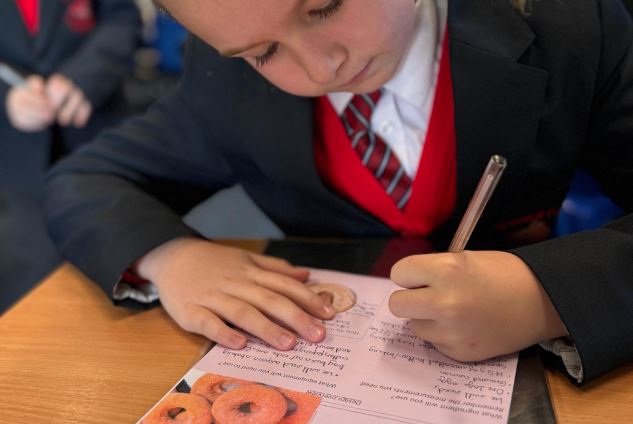
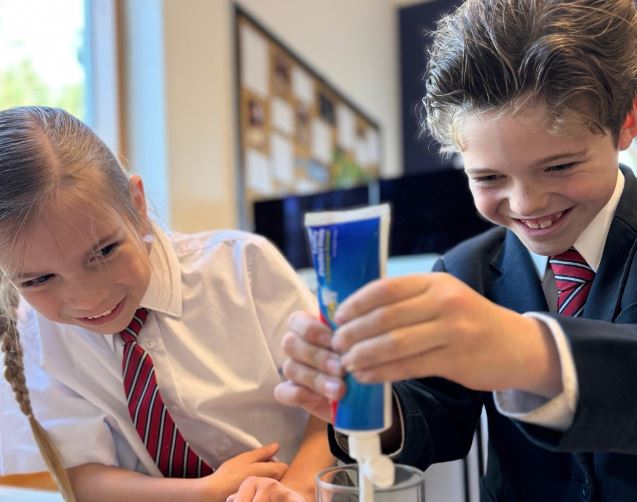
Our distinctive approach to continuous provision begins in Reception and continues through Years 1, 2, 3 and 4. This gives children regular opportunities to explore, investigate, create, solve problems and apply what they have been taught.
Continuous provision does not replace direct teaching. Children receive carefully planned teaching from their teachers and then use the classroom environment to practise, deepen and apply their knowledge and skills.
What is continuous provision?
Continuous provision describes the carefully planned learning opportunities that are available throughout the classroom.
These may include areas for:
-
reading, writing and storytelling;
-
mathematics and problem-solving;
-
science and investigation;
-
construction and design;
-
art and creativity;
-
role play and communication;
-
developing fine-motor skills; and
-
exploring topics from across the curriculum.
These areas are not simply opportunities for children to play freely. Teachers select and adapt the resources, activities and challenges so that they connect directly with current learning and meet the needs of the children.
Adults observe, question, model and support children as they work, helping them to develop their understanding and move their learning forward.
Direct teaching and independent learning
Children at St Paul’s experience a carefully balanced combination of:
-
high-quality direct teaching;
-
guided work with an adult;
-
focused individual and group activities; and
-
purposeful independent learning through continuous provision.
For example, after being taught a mathematical concept, children might apply it through a practical problem-solving activity. Following a science lesson, they may investigate materials or observe changes independently. New vocabulary and ideas from a shared book may be developed through writing, role play or creative work.
This allows teachers to see whether children can use what they have learned in different situations—not simply complete a task immediately after being shown how to do it.
Why does continuous provision continue beyond Reception?
Young children do not suddenly stop benefiting from practical, exploratory learning when they leave Reception.
By continuing continuous provision through to Year 4, we give children time to develop as confident, independent and increasingly sophisticated learners.
As children move through the school, the provision develops with them. Activities become more challenging, expectations increase and children take greater responsibility for planning, completing and evaluating their work.
This approach helps children make a successful transition from the Early Years Foundation Stage into the National Curriculum while retaining the curiosity, creativity and enthusiasm that characterise effective early learning.
What are the benefits for children?
Our approach helps children to:
-
become confident and independent learners;
-
develop resilience when things do not work immediately;
-
make choices and take responsibility for their learning;
-
apply knowledge and skills in meaningful situations;
-
communicate and collaborate effectively;
-
solve problems and think creatively;
-
sustain concentration and complete increasingly complex tasks;
-
learn from mistakes and try different approaches; and
-
develop a genuine enjoyment of learning.
It also enables teachers to respond to children’s different starting points, interests and needs. Additional support or challenge can be introduced naturally within the classroom while ensuring every child remains included in the same ambitious curriculum.
What does the teacher do?
Continuous provision is carefully planned and led by the teacher.
Teachers:
-
identify the knowledge and skills children need to develop;
-
provide clear direct teaching;
-
plan appropriate opportunities for children to apply their learning;
-
observe and assess children as they work;
-
ask questions that deepen thinking;
-
model language, skills and learning behaviours;
-
provide support or challenge when it is needed; and
-
adapt the environment as children’s learning develops.
The classroom environment therefore forms an important part of the teaching. Every area and resource has a purpose and is regularly reviewed.
An approach that helps children flourish
Continuous provision reflects our Christian vision of enabling every child to experience “life in all its fullness”.
Children are encouraged to be courageous, try new things and “step out of the boat” in their learning. They learn that mistakes are part of learning and that perseverance, curiosity and collaboration help them to grow.
Our aim is for children to leave St Paul’s as knowledgeable, confident and creative young people who are ready to embrace future challenges.
Come and see it in action
The best way to understand our approach is to see it for yourself.
During a visit to St Paul’s, you can explore our learning environments, see continuous provision in action and talk to our teachers about how it supports children’s development.
Book a personal tour and come and discover what makes learning at St Paul’s different.